






The persistent hum, whine, or sharp chatter of a hydraulic distributor is more than an operator nuisance; it signals energy loss, component stress, and impending maintenance costs. In mobile applications like tractors, trucks, and automobiles – where cabin proximity magnifies acoustic discomfort – noise reduction becomes a critical engineering imperative. Understanding the complex interplay between fluid dynamics, mechanical vibration, and component design is key to silencing these vital control units. Manufacturers like HEBEI LONGSHENGTENGYU PUMP INDUSTRY CO., LTD (LSTY) leverage over two decades of hydraulic expertise to tackle noise at its source, recognizing that a quiet hydraulic distributor valve is often an efficient and durable one.
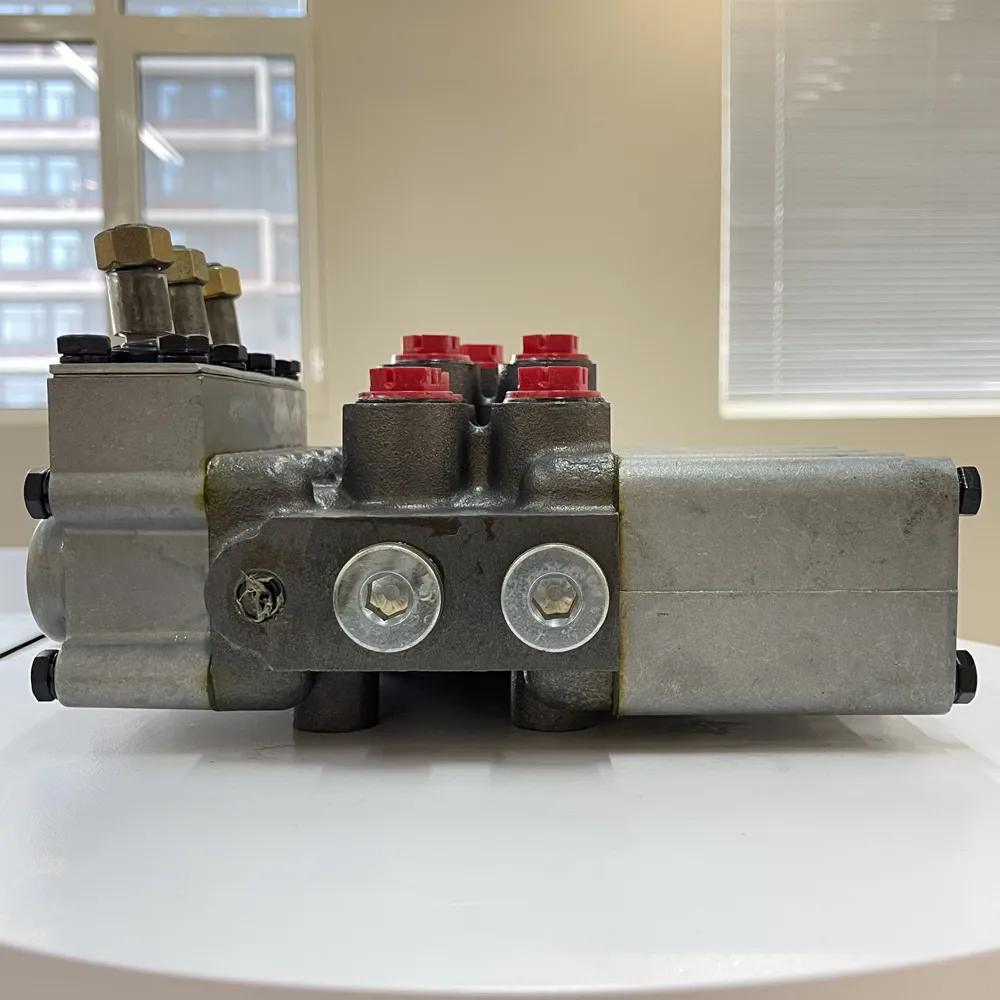
The Origins of Hydraulic Distributor Noise
Noise in a hydraulic distributor stems from three primary, often interconnected, phenomena: fluid-borne noise, structure-borne vibration, and aerodynamic effects.
- Fluid-Borne Noise: Rapid shifts in fluid pressure, especially during sudden hydraulic distributor valveactuation, create shockwaves traveling through the system. These pressure ripples excite piping and housings, radiating sound. Common culprits include:
- Fast solenoid switching causing water hammer effects.
- Poorly matched pump flow to valve capacity.
- Inadequate damping in control circuits.
LSTY's integration centeraddresses this holistically, ensuring distributor valves are matched to pump characteristics during system design consultation, minimizing inherent pressure pulsations. - Structure-Borne Vibration (Mechanical Clatter andResonance): The physical movement of valve spools, poppets, or plates within the distributor body creates impacts. When these impacts occur at frequencies matching the natural resonance of valve components or mounting structures, noise amplifies significantly. Precision manufacturing is paramount here.
LSTY utilizes fully automatic gear checking machines and CAT full computer-controlled testing machines to achieve micron-level spool-to-bore clearances, minimizing lateral movement and impact velocity that cause "spool rattle."
- Aerodynamic Noise (Cavitation andAeration): Perhaps the most destructive and noisy Cavitation occurs when local fluid pressure drops below vapor pressure, forming bubbles that violently collapse upon entering high-pressure zones. Aeration involves entrained air bubbles being compressed and decompressed. Both generate sharp, crackling sounds and damage surfaces. The hydraulic distributor function of rapidly shifting flow paths makes certain designs prone to creating localized low-pressure zones. LSTY combats this through:
Computational Fluid Dynamics (CFD) optimizing internal port shapes for smooth flow transition, avoiding sharp edges that trigger pressure drops.
Specialized porting designs that gradually open and close flow paths, preventing sudden pressure vacuums.
Rigorous testing protocols on their computer-controlled rigs to identify and eliminate cavitation tendencies before production.
Hydraulic Distributor Valve:Material Science and Precision Engineering
The physical construction of the hydraulic distributor valve heavily influences its acoustic signature. Advancements focus on damping vibrations and containing pressure waves.
- Advanced Housing Materials and Construction:
- Ductile Iron with High Damping Capacity: LSTY selects grades offering superior vibration damping compared to standard cast iron or steel, absorbing energy before it radiates as sound.
- Sandwich Construction with Damping Layers: For critical applications, distributors incorporate constrained layer dampingwithin the housing or mounting flanges, effectively converting vibration energy into heat.
- Precision Machining for Sealing Integrity: Leaks not only reduce efficiency but also create hissing noises.
- Spool and Component Innovations:
- Low-Noise Spool Geometries: Patented spool designs feature pressure-balanced lands, tapered notches, and flow-straightening features that minimize turbulence and pressure fluctuations during shifting – core to smooth hydraulic distributor function. LSTY's R&D team continuously refines these profiles.
- Composite and Polymer Inserts: Strategic use of engineered polymers (e.g., PEEK, reinforced nylons) for bushings, dampers, and wear plates provides inherent damping and reduces metal-to-metal contact noise.
- Micro-polished Surfaces: Beyond just clearances, the surface finish of spools and bores is critical. Mirror-like finishes reduce friction-induced vibration and minimize the nucleation points for cavitation bubbles. LSTY's advanced finishing processes achieve this consistently.
Hydraulic Distributor: System Integration and Control Strategie
A hydraulic distributor doesn't operate in isolation. Its noise is influenced by, and influences, the entire hydraulic circuit. Effective silencing requires a system-level approach.
- Optimizing Pump-Distributor Interaction: Mismatched flow and pressure settings are prime noise generators. LSTY's manufacturing centerand supply chain management center ensure compatibility:
Providing matched pump and distributor sets tuned for specific applications.
Implementing pressure-compensated or load-sensing systems that only deliver the flow and pressure demanded, avoiding constant relief valve bypass – a significant noise and heat source.
- Accumulator Integration for Pulsation Damping: Strategically placed bladder or piston accumulators act as hydraulic "shock absorbers." They absorb pressure spikes during valve shifts and dampen pump pulsations before they reach the hydraulic distributor valve. LSTY's system design expertise includes optimal accumulator sizing and placement recommendations.
- Hose and Mounting Considerations:
- Acoustically Optimized Hoses: Using hoses with specialized dampening layers or spiral-wire reinforcement reduces the transmission of fluid-borne noise along the lines.
- Proper Clamping and Routing: Securing hoses firmly and avoiding sharp bends minimizes hose whip and vibration, common secondary noise sources.
- Intelligent Electronic Control Strategies: Modern electronics offer sophisticated noise reduction:
- Soft Shifting Algorithms: Controller software ramps solenoid current gradually, enabling smooth spool movement instead of abrupt shifts, drastically reducing the "clunk" associated with directional changes. LSTY supports integration with common mobile machine controllers.
- Demand-Based Flow Control: Reducing flow rates during non-critical phases of operation inherently lowers noise levels. Distributors integrated with system controllers can achieve this seamlessly.
FAQs about Hydraulic Distributor
What are the most common causes of excessive noise in a hydraulic distributor valve?
The primary culprits are fluid-borne pressure pulsations, structure-borne vibration, and aerodynamic noise. Internal leakage and worn components amplifying clearances also significantly increase operational noise over time.
How can precision manufacturing reduce hydraulic distributor noise?
Micron-level tolerances in spool-to-bore clearances minimize lateral movement that causes impact noise. Ultra-smooth surface finishes reduce friction-induced vibration and cavitation nucleation. Precise machining ensures optimal seal performance, preventing hissing leaks. LSTY's investment in fully automatic gear checking and computer-controlled testing guarantees this precision.
Does the hydraulic distributor function impact its noise generation?
Absolutely. Valves requiring rapid, full-flow shifts are inherently noisier than those designed for proportional or metered flow control. The speed and force of actuation, the internal flow path design, and the pressure differentials across the valve during operation are all dictated by its function and directly influence noise levels.
Can system design outside the hydraulic distributor itself affect noise?
Yes, significantly. Factors include pump type and setting compatibility, inadequate suction line design causing cavitation, lack of pulsation dampeners, rigid mounting transmitting vibration, undersized or kinked hoses causing turbulence, and entrained air in the fluid. LSTY's integration expertise focuses on optimizing the entire system for quiet operation.
What are the advantages of choosing a manufacturer like LSTY for low-noise hydraulic distributors?
LSTY combines 21 years of hydraulic specialization, proprietary low-noise designs, state-of-the-art precision manufacturing ensuring tight tolerances, rigorous computer-controlled testing including noise monitoring, and a system-level integration approach.
Reducing noise in hydraulic distributor systems is not merely about operator comfort; it's intrinsically linked to efficiency, component longevity, and system reliability. By tackling noise at its root causes – through advanced materials, precision engineering, intelligent control, and holistic system design – manufacturers like HEBEI LONGSHENGTENGYU PUMP INDUSTRY CO., LTD are delivering quieter, smoother, and more durable hydraulic solutions. Their focus on the demanding environments of mobile agriculture and transportation, where space is constrained and operators are close to the machinery, drives continuous innovation in hydraulic distributor valve technology. As material science advances and electronic control becomes more sophisticated, the future promises even quieter hydraulic systems, enhancing both machine performance and the working environment.
-
Choosing the Right Bucket Truck Hydraulic Pump for Aerial LiftsNoticiasApr.16,2026
-
Ultimate Guide to Selecting a bi directional hydraulic pumpNoticiasApr.09,2026
-
Comprehensive Guide to Backhoe Hydraulic Pump Selection and MaintenanceNoticiasApr.07,2026
-
Comprehensive Guide to Hydraulic Pumps Types Applications and MaintenanceNoticiasApr.04,2026
-
245-1307010-A1-01 Water Pump for MTZ Tractors | HEBOE LONGSHENGTENGYU PUMP INDUSTRY CO., LTDNoticiasApr.01,2026
-
Reliable Zetor Water Pump - Durable Cooling Solutions for Industrial EquipmentNoticiasJan.04,2026
-
Engine Water Pump Diagram – Durable & Efficient Solutions by AutolstyNoticiasJan.03,2026


 Spanish
  English
  Afrikaans
  Arabic
  Belarusian
  Bulgarian
  Esperanto
  French
  German
  Kazakh
  Polish
  Portuguese
  Romanian
  Russian
  Tajik
Tajik  Turkish
  Turkmen
  Ukrainian
  Uzbek
Uzbek  Vietnamese